Calcific Tendinitis Treatment with Shockwave Therapy in Ottawa

If you have already worked through physiotherapy, cortisone injections, and extended rest periods — yet the shoulder or hip pain keeps returning — there may be a structural reason those approaches have offered limited lasting relief. A calcium deposit embedded within a tendon can resist conventional treatment. Ottawa Health: Performance and Rehab offers targeted shockwave therapy for calcific tendinitis in Ottawa, designed to help address the calcification directly, without surgery.

Is This You? Recognizing Calcific Tendinitis Symptoms

Calcific tendinitis is one of the more persistent and frustrating tendon conditions to manage. It often appears as a sudden, sharp catching sensation during otherwise routine activities — whether you are sitting at a desk, playing recreational sports, or working through a fitness routine. Many patients who come to us have already tried several approaches without durable relief. Some arrive with confirmed calcium deposits on a shoulder ultrasound, unsure of what to do next.

If any of the following physical signs resonate with you, you are in the right place:

  • A sharp, burning ache that flares with specific movements — such as reaching overhead for a shelf or pushing off during a run
  • Severe night pain that disrupts sleep, particularly when resting on the affected shoulder or hip
  • A catching or grinding sensation deep within the joint during routine daily motions
  • A gradual, persistent loss of range of motion and strength that has not resolved with rest or stretching alone

How Does Shockwave Therapy Help with Calcific Tendinitis?

When calcium deposits form inside a tendon — most commonly in the rotator cuff, Achilles, or hip — they can act like a persistent structural irritant in the surrounding tissue. That tissue may remain inflamed regardless of rest because the underlying calcification is still present. Standard conservative approaches do an effective job managing soft tissue symptoms like inflammation and muscle tightness, but they may not dissolve hardened calcium hydroxyapatite crystals embedded within a tendon. This is not a failure of physiotherapy — it is a mismatch in clinical approach.


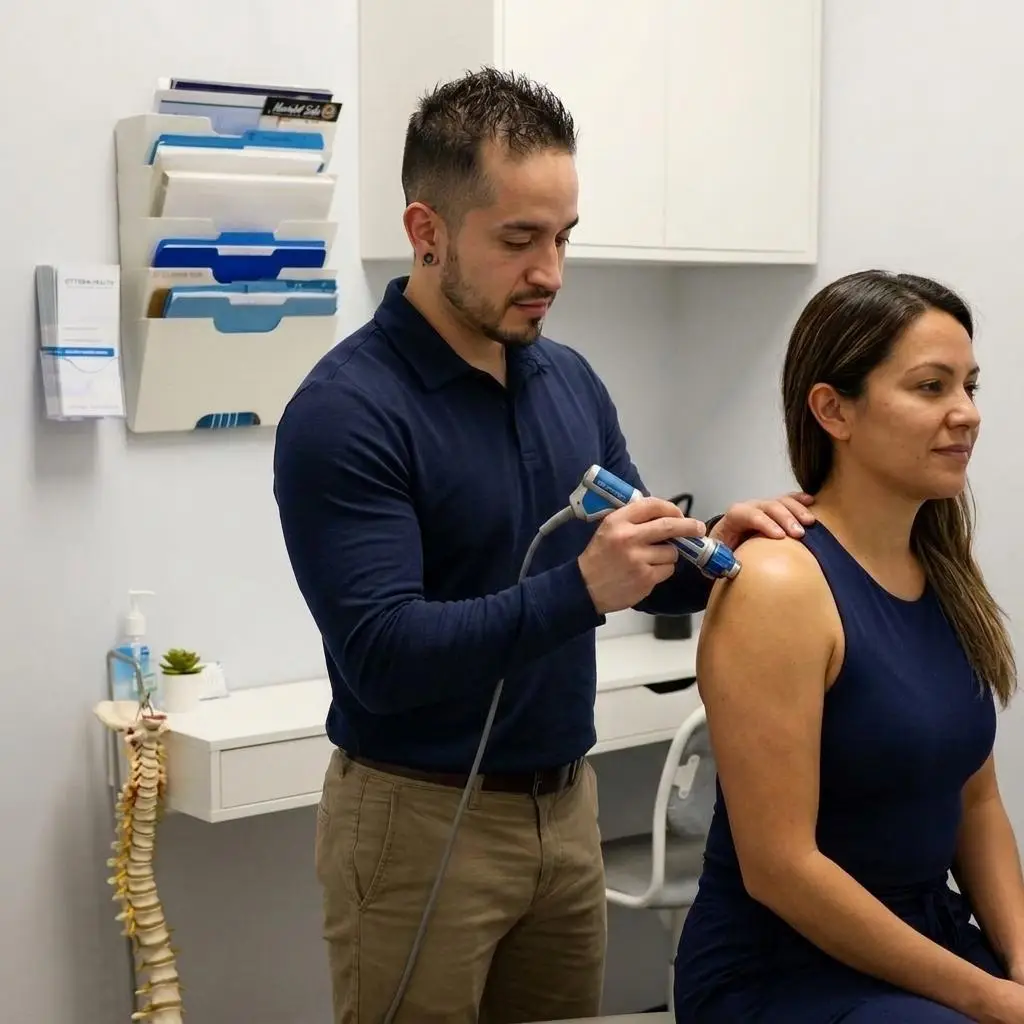
Shockwave therapy works differently. It delivers rapid, high-energy acoustic pressure waves directly into the affected tendon. These waves are designed to fracture the crystalline structure of the calcification, breaking it into fragments small enough for your body to gradually reabsorb and clear through its natural biological processes.


At Ottawa Health, our licensed practitioners use the Swiss DolorCast radial shockwave device — clinical-grade equipment that has been used in many medical research trials investigating non-invasive shockwave therapy for calcific tendinosis. This supports evidence-based application protocols tailored to your specific tendon presentation.

Swiss DolorCast shockwave Ottawa

What Should You Expect from Shockwave Treatment?

Your care journey at Ottawa Health follows a structured, patient-centred approach. Here is what each stage typically looks like:

Stage

What Happens

Duration

Initial Clinical Assessment

Your licensed practitioner conducts a thorough structural evaluation, reviews any prior imaging or treatment history, and locates the calcium deposit. A personalized shockwave protocol is then mapped out based on your specific tendon presentation and clinical goals.

60 minutes

Treatment Sessions

Conductive gel is applied to the skin over the affected area. The Swiss DolorCast wand then delivers approximately 2,000 focused acoustic impulses directly to the calcification. Most patients describe the sensation as a firm tapping or pressure. Treatment intensity is continuously adjusted to match your tolerance throughout each session.

15–20 min per session

Recovery Timeline

A standard protocol involves 3 to 6 sessions spaced approximately 4 to 7 days apart. Many patients notice a reduction in acute pain within the first few sessions, while biological reabsorption of the calcium fragments may continue for several weeks to months following treatment.

3–6 weeks total

Calcific Tendinitis Ottawa

Our Shockwave Therapy Service at Ottawa Health

If you have reached a recovery plateau with standard interventions and are considering your next steps, shockwave therapy may provide targeted, meaningful relief for your tendon. At Ottawa Health: Performance and Rehab, our credentialed practitioners have developed this paramedical service around the specific clinical demands of complex, calcification-driven tendinopathies — serving athletes, working professionals, and active individuals across Ottawa.


To learn more about our methodology — including our detailed assessment process and the Swiss DolorCast technology we utilize — visit our shockwave therapy service page. We are here to help you work toward meaningful, lasting recovery.

How Do Calcific Tendinitis Treatment Options Compare?

When your condition has stopped responding to routine care, understanding the full range of available clinical pathways is an important step. Here is how the primary evidence-based options compare:

Treatment

How It Works

Key Considerations

Shockwave Therapy

Delivers focused acoustic waves into the tendon to help fracture calcium deposits, working to prompt natural biological reabsorption over time.

Non-invasive with no downtime required. Often considered as a non-surgical option before exploring more invasive clinical procedures.

Cortisone Injections

Reduces localized joint inflammation to provide temporary pain relief.

Does not address the calcium deposit itself. Repeated use may carry potential considerations for long-term tendon tissue integrity.

Ultrasound-Guided Needling (Barbotage)

Uses a needle under imaging guidance to mechanically aspirate or break up the calcific deposit.

An invasive procedure typically considered when conservative modalities have not provided sufficient relief.

Arthroscopic Surgery

Direct surgical removal of the hardened calcium deposit from the tendon.

Typically considered for severe cases that have not responded to non-operative care. Carries standard surgical risks and rehabilitation timelines.

Many clinical guidelines support shockwave as a non-surgical option worth considering. Because every patient presentation differs, always discuss your treatment history with a credentialed provider before selecting a pathway.

Why Choose Ottawa Health for Calcific Tendinitis Care

Managing persistent calcific tendinitis requires a clinical approach that goes beyond symptom management — it requires targeting the underlying structural cause. Here is what structures your recovery at Ottawa Health: Performance and Rehab:
  • Licensed Practitioners with Verified Experience:
    Dr. Rich, Dr. Steven, and Taofiq bring comprehensive hands-on experience managing complex tendinopathies, focusing on the underlying structural contributors rather than surface-level symptom relief alone.
  • Clinical-Grade Technology:
    We utilize the Swiss DolorCast radial shockwave system — the same class of device featured in many international research trials examining non-invasive shockwave application for tendinosis.
  • Integrated Treatment Under One Roof:
    Your shockwave sessions are coordinated with progressive movement rehabilitation managed within our clinic, providing a cohesive and connected recovery pathway.
  • Same-Day Assessments Available:
    Rapid consultation availability means you can begin your guided recovery path without unnecessary waiting. Same-day appointments are available to help you get started promptly.
Swiss DolorCast shockwave Ottawa

Testimonials

Patient Experiences

Schedule Your Appointment Today

Book a complimentary discovery visit and learn about what Chiropractic Care For Tension Headaches In Ottawa can do for you!


FREQUENTLY ASKED QUESTIONS

Frequently Asked Questions About Shockwave Therapy for Calcific Tendinitis

How many shockwave sessions will I need for calcific tendinitis?

Most patients require between three and six treatment sessions, typically spaced approximately one week apart. The exact number depends on the observed size and density of your calcium deposit as assessed by your practitioner. Your protocol will be adjusted based on how your tendon responds during the biological reabsorption process throughout your course of care.
Standard physiotherapy is effective at addressing soft tissue limitations such as muscle tightness and localized inflammation, but it may not dissolve dense calcium crystals embedded within deeper tendons. Shockwave therapy works at a structural level, targeting the rigid calcification directly to help fracture the deposit and prompt biological breakdown. This difference in clinical mechanism is why shockwave is often introduced when physiotherapy alone has reached its limits.
Cortisone injections temporarily lower local inflammation to provide short-term pain relief, but they do not impact the calcium deposit itself. Shockwave therapy works at a structural level, aiming to fracture the localized calcification and prompt tissue clearance rather than simply easing discomfort. For patients whose pain keeps returning after injections, shockwave may offer a more targeted alternative.
Many clinical guidelines suggest considering non-invasive shockwave therapy before surgical procedures such as arthroscopic removal or ultrasound-guided needling. Shockwave requires no local anesthesia, involves no incisions, and typically carries minimal downtime compared to operative approaches. Always discuss your full treatment history with a credentialed provider to determine the most appropriate pathway for your specific presentation.
Shockwave therapy at Ottawa Health is typically delivered under physiotherapy or chiropractic care evaluations, and many Canadian extended health benefit plans may provide coverage for these services through paramedical health allotments. We offer direct billing to help reduce administrative steps so your focus remains on recovery. Contact our clinic directly to confirm your specific coverage details before your first appointment.
Most patients describe the sensation during shockwave delivery as a rapid tapping or firm external pressure tracing over the area of the calcification. Because your practitioner continuously adjusts intensity to match your tolerance throughout the session, the treatment is generally well-managed. Focused acoustic application typically takes only minutes per session, after which most patients can return to their normal daily activities.

Ready to Address Your Calcific Tendinitis?

If calcific tendinitis has been limiting your daily activities despite previous treatments, shockwave therapy at Ottawa Health offers a non-invasive option worth considering. Same-day clinical assessments are available so you can begin your path toward recovery without unnecessary delay.

Or call us to discuss how shockwave therapy could fit into your care plan.

Insurance and Direct Billing at Ottawa Health

Shockwave therapy at Ottawa Health is typically provided within physiotherapy or chiropractic care evaluations, meaning many Canadian extended health benefit plans may offer coverage through their paramedical health allotments. We offer direct billing to reduce the administrative burden on you, so your attention can remain focused on tendon recovery rather than paperwork. Same-day appointment blocks are available to help you start your assessment without delay. Please call our clinic to confirm your specific coverage details prior to your visit.

Areas We Serve

Ottawa Health: Performance and Rehab is centrally positioned to support patients across the National Capital Region. We provide calcific tendinitis assessments and shockwave treatment for residents traveling from communities throughout Ottawa, including : Alta Vista, Barrhaven, Gloucester, Orleans, and Ottawa Urban Core.


Whether you are traveling from a neighboring township or living near the city centre, our flexible same-day scheduling helps local residents access timely, comprehensive calcific tendinitis care.

Meet The Team at Ottawa Health: Performance and Rehabilitation | (613) 728 9414

Top Chiropractic Clinic
Thank you for your support!

2022, 2023, 2024

CONTACT

Ottawa Health: Performance and Rehabilitation
1535 Bank Street
Ottawa, ON K1H 7Z1

Telephone: (613) 728 9414

Fax: (613) 702 8676

E: Frontdesk@ottawahealth.ca

Office Hours

Day
Hours
Monday
8:00 am – 7:30 pm
Tuesday
8:00 am – 7:30 pm
Wednesday
8:00 am – 7:30 pm
Thursday
8:00 am – 7:30 pm
Friday
8:00 am – 4:00 pm
Saturday
10:00 am – 2:00 pm

FIND US

Ottawa Health: Performance and Rehabilitation is conveniently located to serve Ottawa and Alta Vista from our new state-of-the-art location on Bank Street. We’re near the intersection of Bank and Heron Rd., across from Farm Boy and south of Billings Bridge. Public transport stops are nearby.