

TLDR
Physiotherapy draws on several evidence-based treatment categories, including manual therapy, therapeutic exercise, electrotherapy, and functional training. A registered physiotherapist selects and sequences these based on a detailed assessment of your movement, symptoms, healing stage, and activity goals. No two plans are identical, and the approach shifts as your capacity improves.
If you have ever wondered what actually happens in a physiotherapy session, you are not alone in that question. Many people arrive expecting one specific treatment only to find their physiotherapist drawing from several different tools, adjusting the plan as the session unfolds.
The word physiotherapy comes from the Greek roots “phusis,” meaning nature or physical, and “therapeia,” meaning healing or medical treatment. Together, the discipline is rooted in healing the body through physical means. What makes modern physiotherapy effective is not any single technique but the clinical reasoning that connects assessment findings to treatment choices.
This post explains the core treatment categories available, how physiotherapists decide which ones to use, and how those choices shift across the stages of recovery.
Does Physiotherapy Treatment Start With a Modality or an Assessment?
It starts with assessment, not a modality. Before any hands-on care or exercise begins, a physiotherapist gathers detailed information about your movement patterns, strength, joint mobility, pain behaviour, injury history, and functional goals.
That starting point looks different depending on who walks through the door. A 22-year-old soccer player returning from a hamstring strain needs different information gathered than a 47-year-old office professional managing neck pain from prolonged sitting, or a retired adult working to maintain independence on stairs. The diagnosis label alone does not determine the plan. Two people with the same diagnosis often need quite different approaches based on how they move, what they do daily, and what they want to get back to.
According to resources available through the University of Saskatchewan’s rehabilitation reference library, physiotherapy modality selection is grounded in clinical literature that links tissue behavior, loading tolerance, and neuromuscular control to specific interventions. This reinforces why assessment-first reasoning shapes every decision that follows.
Treatment plans also evolve. What a physiotherapist prescribes in session one often changes significantly by session five, because symptoms, tolerance, and function all shift as recovery progresses.
What Is Manual Therapy in Physiotherapy and When Is It Used?
Manual therapy refers to hands-on techniques applied directly to joints, muscles, and soft tissues. Physiotherapists use it to improve joint mobility, reduce tissue tension, calm irritated structures, and prepare the body for active movement.
Common manual therapy approaches include joint mobilization, soft tissue release, and targeted pressure applied to specific areas of restriction or sensitivity. The goal is to create a localized change in a particular tissue, whether that means restoring range of motion in a stiff shoulder, reducing protective guarding in a lower back, or improving tissue extensibility in a recovering ankle.
Manual therapy works best as one layer within a broader plan. It is rarely effective on its own over the long term. Physiotherapists typically pair it with therapeutic exercise so that the mobility gained through hands-on care becomes reinforced through active movement. Technique selection depends on tissue irritability, the current healing stage, and the movement limitations identified during assessment.
How Does Therapeutic Exercise for Rehabilitation Work?
Therapeutic exercise is targeted movement prescribed to rebuild strength, neuromuscular control, balance, endurance, and mobility following injury or dysfunction. It is one of the most consistently supported approaches across physiotherapy practice.
Progression follows a clear logic. Early sessions focus on range-of-motion work and gentle activation to reduce protective inhibition. As tolerance improves, loading increases through resisted strengthening, stability demands, and eventually sport- or task-specific movement patterns.
Exercise dosage is where the clinical detail lives. Sets, repetitions, load, tempo, rest periods, and training frequency are all adjusted to match where a person is in recovery and what they are working toward. A runner rebuilding after a knee injury follows a different progression than a desk-based professional addressing thoracic stiffness, or an older adult retraining balance after a fall.
The City of Mississauga’s therapeutic recreation guidance acknowledges that adapted physical activity, including structured exercise, plays a meaningful role in recovery from injury, post-surgical rehabilitation, and management of ongoing physical conditions. Therapeutic exercise in physiotherapy operates from that same premise, with precise clinical calibration added.
What Is Electrotherapy in Physiotherapy and How Is It Applied?
Electrotherapy covers a range of device-based modalities that physiotherapists use when the clinical picture calls for them. Different devices work through different mechanisms: electrical stimulation supports muscle activation, helps prevent atrophy, and assists in retraining neuromuscular control. Ultrasound uses sound waves to produce cellular friction and heat, which supports tissue repair in certain presentations. Shockwave therapy applies focused acoustic energy to break down calcifications and stimulate blood flow at a target site.
These tools are not defaults. A physiotherapist integrates electrotherapy into a plan when there is a specific clinical reason to do so, whether that is a muscle that is not activating properly after injury, tissue irritability that is slowing progress, or a chronic tendon issue that is not responding to exercise alone.
Electrotherapy also has precautions and contraindications. Before using any device-based modality, a physiotherapist screens for conditions that make certain modalities inappropriate, including implanted devices, active infection, circulatory concerns, and others. Patient safety shapes every decision about whether and how to use these tools.
As clinical literature on individualized care planning notes, adapting treatment decisions to each patient’s specific presentation, history, and tolerance is central to responsible care. That principle applies directly to electrotherapy selection.
What Is Functional Training After Injury and Why Does It Matter?
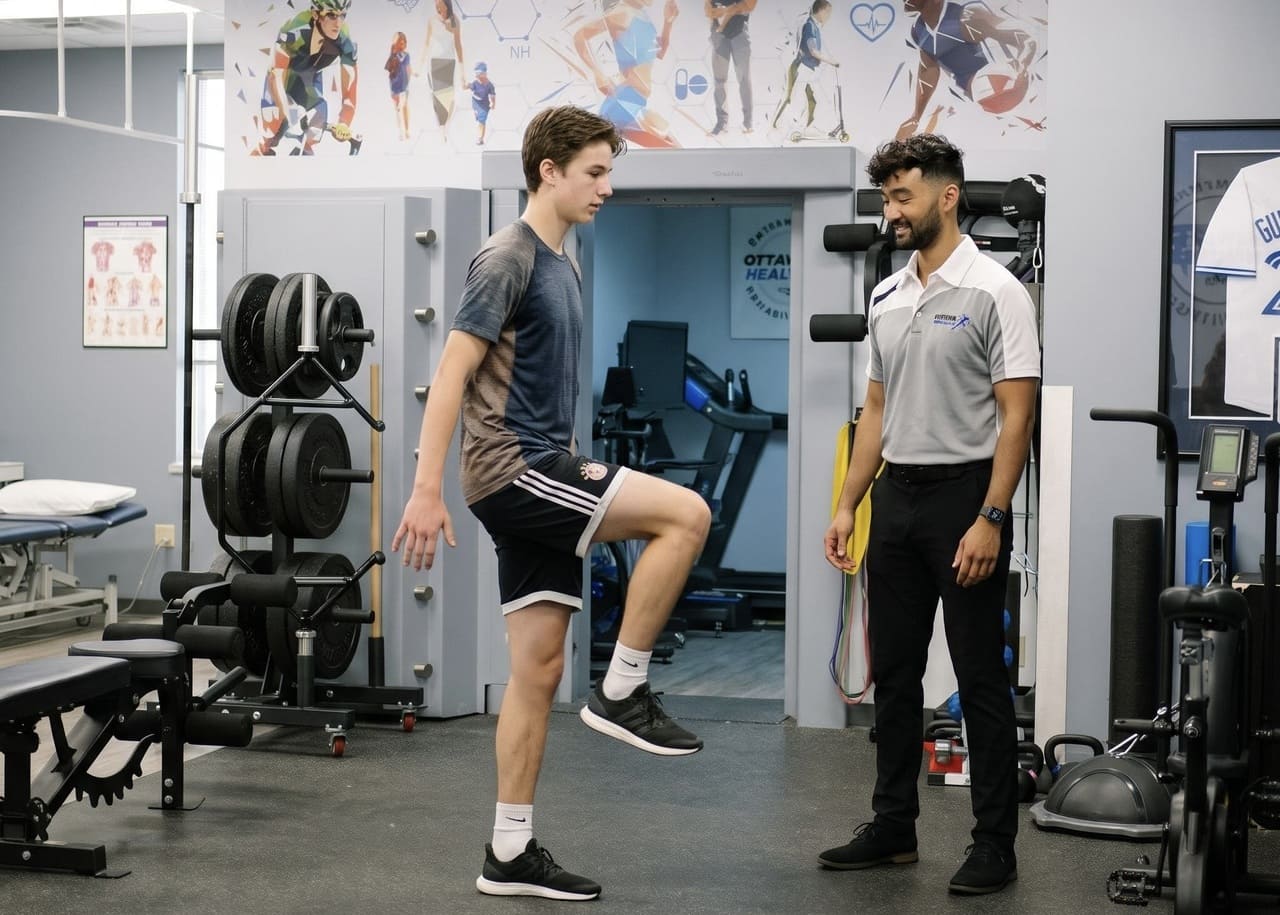
Functional training is the stage where rehabilitation connects to real life. It involves practicing movements that mirror what a person needs to do at work, in sport, or in daily activities, rather than isolated exercises performed only in a clinical setting.
This looks different for every person. A recreational hockey player works on lateral cutting and edge control. An office professional rehearses sustained sitting postures and workstation transitions. A golfer rebuilds rotational power and hip mobility through sport-specific sequencing. A retiree trains stair negotiation, floor transfers, and confident walking on uneven surfaces.
Functional training typically comes later in a rehabilitation plan, once pain, mobility, strength, and movement control have reached a threshold where more complex demands are appropriate. Progressing to this stage too early can strain tissue that is not yet ready. Delaying it too long leaves a gap between clinic performance and real-world demands.
How Do Physiotherapists Sequence Treatments Through Healing Phases?
Physiotherapists organize treatment around tissue healing phases and clinical response rather than fixed timelines. The general progression moves through calming irritation, restoring mobility, rebuilding strength, retraining function, and supporting long-term movement health.
In the early phase of an acute injury, protection and symptom management take priority. Manual therapy addresses tissue sensitivity and mobility restrictions. Exercise stays within a pain-free or low-load range. As healing progresses and tolerance builds, the plan shifts toward progressive loading, motor control work, and functional training.
A single physiotherapy session often layers multiple approaches. A physiotherapist might use manual therapy to improve joint motion, follow it with targeted exercise to reinforce neuromuscular control, and close with a functional task to apply the gains in a meaningful context. Each element supports the others.
What matters most is that sequencing responds to how a person is actually progressing. There is no single protocol that fits every presentation. The plan advances based on pain response, movement quality, strength output, confidence, and the demands of each person’s daily life.
|
Healing Phase |
Primary Focus |
Common Treatment Tools |
|
Acute / Early |
Protect tissue, reduce irritability, maintain basic mobility |
Gentle manual therapy, low-load exercise, electrotherapy where indicated |
|
Subacute / Mid |
Restore mobility and begin progressive loading |
Manual therapy, therapeutic exercise, mobility work |
|
Late Rehabilitation |
Rebuild strength, control, and confidence |
Resisted exercise, balance training, task-specific movement |
|
Functional Return |
Connect recovery to sport, work, and daily demands |
Functional training, sport-specific drills, activity simulation |
Key Takeaways
- Physiotherapy treatment begins with a full assessment of movement, strength, pain behaviour, and goals. The diagnosis alone does not determine the plan.
- Manual therapy is a hands-on approach used to restore joint mobility and reduce tissue tension. It is most effective when paired with active exercise rather than used in isolation.
- Therapeutic exercise is prescribed with specific dosage variables (load, sets, tempo, frequency) that are adjusted to match each person’s current capacity and recovery stage.
- Electrotherapy tools such as electrical stimulation, ultrasound, and shockwave therapy are selected for specific clinical reasons and always screened for precautions before use.
- Functional training bridges clinical exercises and real-world movement demands, and its timing depends on how far pain, mobility, and strength have progressed.
- Physiotherapists layer and sequence modalities based on healing phase and individual response, not a standard protocol applied to everyone with the same condition.
Book a Physiotherapy Assessment in Ottawa
Ottawa Health: Performance and Rehab provides physiotherapy care that brings thorough assessment, clinical treatment planning, and graduated progression together within one coordinated approach. Our licensed team of physiotherapists works with athletes, active adults, working professionals, and those in later life stages to develop clear, practical plans grounded in current findings and each person’s movement goals. Book a physiotherapy assessment in Ottawa to receive a plan built around where you are now and where you want to go.
Frequently Asked Questions
What are the different types of physiotherapy treatments available?
Common physiotherapy treatments include manual therapy, therapeutic exercise, electrotherapy (such as electrical stimulation, ultrasound, and shockwave therapy), acupuncture, cupping, mobility training, balance work, and functional movement training. The right combination for any individual depends on assessment findings, the current healing stage, and personal goals.
Will every physiotherapy plan include manual therapy or electrotherapy?
No. Not every plan includes hands-on care or device-based modalities. Some presentations call for a primarily exercise-based approach combined with movement education and gradual loading. Physiotherapists choose each tool based on clinical need, the individual’s presentation, and safety screening rather than applying a standard template to everyone.
How does a physiotherapist decide when to progress exercises?
Progression decisions are based on observable and reported factors including pain response, movement quality, strength output, neuromuscular control, and confidence with current exercises. The demands of a person’s work, sport, or daily activities also shape when and how the plan advances.